


I watched a $200,000 AI project die last quarter. Not because the technology failed—it worked beautifully in demos. It died because nobody asked whether the company's supply chain could actually handle what the AI was designed to produce.
This isn't rare. General Motors built an AI-designed seat bracket that was 40% lighter and 20% stronger than the original. Engineering marvel. Never made it into a single car. Their manufacturing systems were built for stamped steel—they couldn't produce the complex geometry the AI generated.
I'll show you the pattern behind failures like this in a moment. First, let me explain what's actually happening in the AI consulting market—because the numbers tell a story most vendors won't share with you.
What Does an AI Strategy Consultant Actually Do?
An AI strategy consultant sits between what AI can technically do and what your business can actually absorb. That gap is wider than most people realize.
The AI consulting market hit $8.8 billion in 2024 and is projected to reach $73 billion by 2033—that's 26% annual growth. But here's what those growth numbers don't tell you: over two-thirds of enterprise leaders expect 30% or fewer of their AI experiments to reach full scale in the next three to six months. According to Deloitte, that's not a technology problem. It's a delivery problem.
A strategy consultant's job is to solve the delivery problem before you spend the money. They answer three questions:
- Where in your business will AI actually create value (not just look impressive)?
- Can your organization—people, processes, systems—handle what AI will produce?
- What's the realistic path from pilot to production?
78% of companies used AI in some form in 2024, according to Stanford's AI Index. But using AI and generating value from AI are different things. The consultant's job is to close that gap.
The Five Functions That Separate Strategy From Guesswork
AI consultant services typically cover five critical functions. Understanding these helps you evaluate whether you need outside help or can handle this internally.
- **AI vision formulation** — Creating a clear picture of how AI aligns with your actual business objectives, not just implementing technology because competitors are
- **Organizational readiness assessment** — Evaluating whether your current capabilities, data infrastructure, and team skills can support what you're planning
- **Technology evaluation** — Identifying which AI solutions fit your specific needs versus which ones are overhyped for your situation
- **Implementation planning** — Developing step-by-step deployment strategies with realistic timelines and resource requirements
- **Change management** — Preparing your workforce for AI integration, which is where most projects quietly fail
The last one—change management—is where I see the most expensive mistakes. You can buy perfect technology. If your team doesn't know how to use it, or actively resists it, you've bought expensive shelfware.
Why 40% of AI Investments Fail to Generate Value
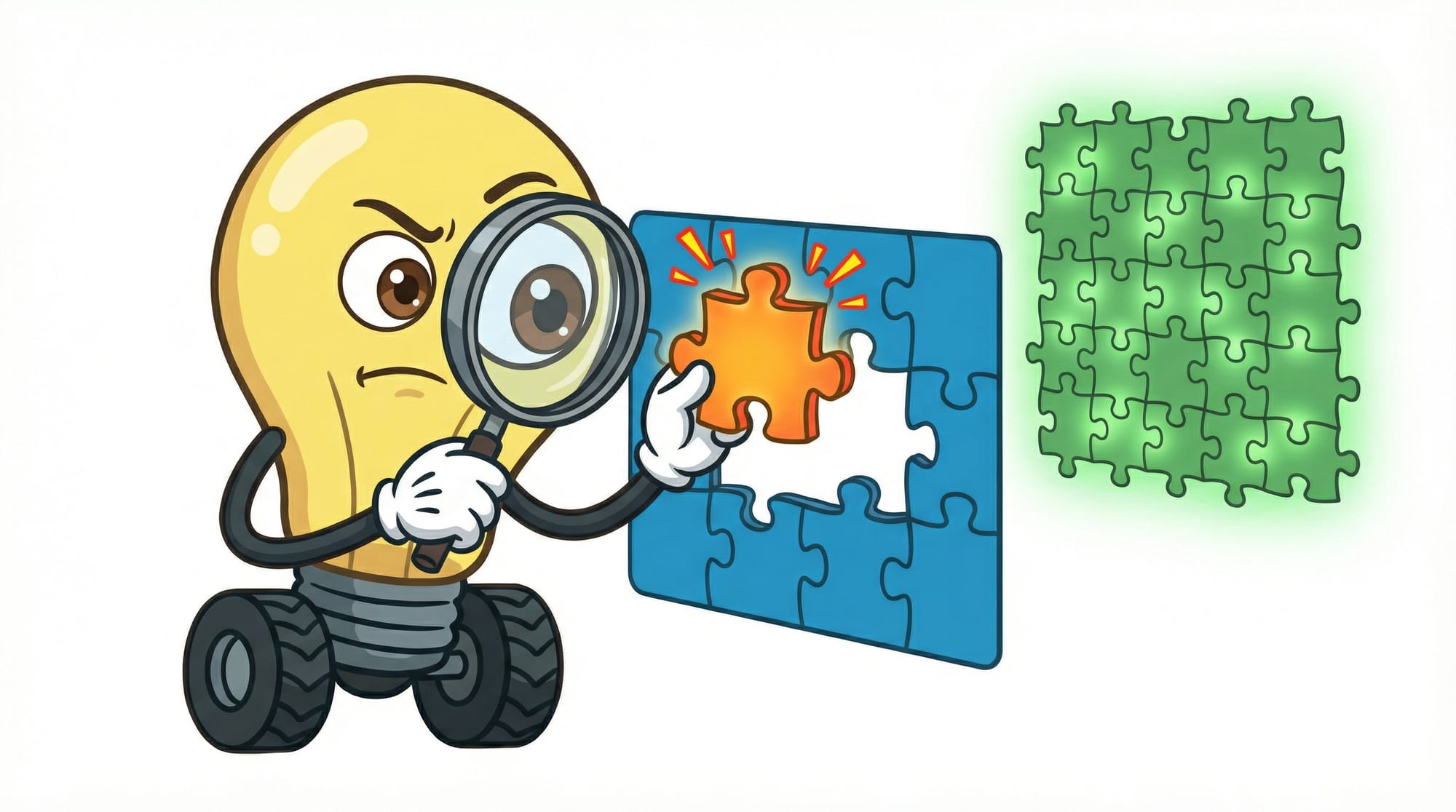
Here's the pattern I promised to show you. Remember that GM seat bracket? That's not an isolated case.
40% of organizations making significant AI investments struggle to generate value. Not because AI doesn't work—it does. The failures happen when companies chase the technology without aligning it to the parts of their business they actually control.
Most AI strategies fail because they're tool-first, IT-only, or pilot-bound. The successful ones are business-led with risk-aware governance. The difference isn't subtle:
- **Tool-first** means you bought software and are looking for problems to solve with it. Backwards.
- **IT-only** means technology teams drive AI decisions without understanding operational constraints. GM's seat bracket problem.
- **Pilot-bound** means you run successful experiments that never scale because nobody planned for production requirements.
An AI business consultant's primary value is forcing this alignment conversation before you've spent the budget.
When Your Business Actually Needs an AI Consultant
Not every business needs outside help. Here's how to know if you do.
**You probably need an AI strategy consultant if:**
- You've tried AI tools and they worked in demos but failed in daily operations
- Your team is overwhelmed evaluating options and can't agree on priorities
- You're planning to spend more than $50,000 on AI implementation
- Your industry has regulatory requirements around AI use (healthcare, finance, legal)
- You've had one or more AI projects stall or fail without clear reasons why
**You probably don't need an AI strategy consultant if:**
- You're testing a single tool under $500/month to solve one specific problem
- You have internal technical leadership who understands both AI capabilities and your operations
- You're in exploratory mode with no immediate pressure to show ROI
- Your use case is straightforward—like basic automation or a chatbot for FAQ handling
58% of small businesses now use AI consulting to stay competitive. That's not because they all need it—it's because the landscape is confusing and the stakes feel high. The question isn't whether AI consulting exists. It's whether the complexity of your situation justifies the cost.
How to Evaluate AI Consultant Services Before You Hire
The AI consulting market is full of former software salespeople who rebranded. Here's how to separate the strategists from the pitch decks.
**Ask these questions:**
- What AI projects have you killed? A good consultant has told clients not to proceed. If every project is a green light, they're selling, not advising.
- How do you assess organizational readiness? The answer should include people, processes, and data—not just technology infrastructure.
- What's your approach when a pilot works but the organization can't scale it? This is the GM problem. They should have a specific methodology.
- Can you show me a roadmap you built that took longer than 6 months to execute? Quick wins are fine. But if they've never planned long-term, they're not strategists.
- What happens after you leave? Dependency is a red flag. Good consultants build internal capability.
Skills required for AI consulting roles include analytical thinking, communication, basic machine learning understanding, and structured problem solving. Notice what's not on that list: deep technical AI expertise. Strategy consultants aren't building models—they're ensuring the models fit your business.
The Monday Morning Decision Framework
If you're reading this trying to decide whether to hire an AI strategy consultant this week, here's your action plan:
- **Audit your current AI spend** — List every AI tool you're paying for. Note monthly cost and whether it's actually being used. If you have more than $2,000/month in AI subscriptions with unclear ROI, you have a strategy problem.
- **Identify your highest-friction process** — What takes your team the most time relative to its value? This is your first AI candidate. If you can't name it in under 30 seconds, a consultant can help you find it.
- **Check your data situation** — Can you access the data needed to automate that process? If the answer is 'I don't know' or 'it's in multiple systems,' factor $5,000-15,000 for data integration into any AI budget.
- **Set a 90-day success metric** — What would have to be true in 90 days for you to call an AI investment successful? If you can't define this, don't spend money yet.
- **Get one internal champion** — Who on your team will own the AI initiative day-to-day? If the answer is 'everyone' or 'no one,' you need either a consultant or a hire first.
- **Budget reality check** — Businesses that use AI for automation see 30-50% productivity boosts according to McKinsey. But those gains require $10,000-50,000 in implementation for most small businesses. If you're under $5,000 budget, start with off-the-shelf tools, not consulting.
If steps 1-4 reveal significant gaps, that's your signal to get outside help.
What an AI Business Consultant Won't Tell You
Consultants have incentives. Knowing them helps you work together better.
- **They benefit from complexity.** Simple solutions mean shorter engagements. Not all consultants will recommend the $200/month tool when the $20,000 custom solution exists.
- **Their success metrics may not match yours.** A consultant might consider a completed roadmap a success. You might only consider ROI a success. Align these upfront.
- **They don't always know your industry.** Generic AI strategy exists. But the specifics of how AI fits into plumbing, legal services, or manufacturing are different. Ask for relevant case studies.
- **The 'assessment phase' can be a sales tool.** Some consultants offer free or cheap assessments designed to uncover problems only they can solve. Get specifics on what you'll own after the assessment.
The NIST AI Risk Management Framework identifies four core functions for managing AI: Govern, Map, Measure, and Manage. Any serious AI strategy consultant should be able to explain how their approach addresses all four. If they can't, they're focused on technology, not strategy.
What This Means for Your AI Investment Decision
- 72% of businesses use AI, but 40% of significant investments fail to generate value—strategy separates the two groups
- AI consultant services cover five functions: vision, readiness, technology evaluation, implementation planning, and change management
- The most common failure pattern is tool-first thinking instead of business-led strategy
- U.S. private AI investment hit $109.1 billion in 2024—the market is mature enough that proven approaches exist
- Start with two pilots tied to KPIs and weekly review, then scale what works—this is the recommended path whether you hire help or go alone
Frequently Asked Questions About AI Strategy Consulting
How much does an AI strategy consultant cost?
Rates vary widely based on scope and consultant experience. Expect $150-500/hour for independent consultants, or $25,000-150,000 for full strategy engagements from established firms. Small business focused consultants often offer fixed-fee packages starting around $5,000-15,000 for initial assessments and roadmaps. The AI consulting market's 26% annual growth means pricing is competitive—get multiple quotes.
What's the difference between an AI consultant and an AI vendor?
A vendor sells you a specific tool or platform. A consultant evaluates your needs and recommends solutions—which might include vendor products, custom development, or deciding not to use AI at all. The best test: does this person benefit financially if you choose a specific product? Vendors do. Consultants shouldn't, though some have partnerships that create conflicts.
Can I handle AI strategy internally?
Yes, if you have someone who understands both AI capabilities and your business operations deeply. The challenge is that most technical staff don't know your business well enough, and most business staff don't know AI well enough. If you have a unicorn who spans both, or can pair a business leader with a technical leader who communicate well, internal strategy is viable. The consultant's value is bridging that gap.
How long does an AI strategy engagement typically take?
Assessment and roadmap phases typically take 4-8 weeks. Full implementation support can run 6-18 months depending on complexity. The recommendation to start with two pilots tied to KPIs means you should see initial results within 90 days of starting implementation. If a consultant can't show progress within a quarter, question the approach.
What industries benefit most from AI strategy consulting?
Industries with high data volume, repetitive processes, or regulatory complexity see the clearest benefits: financial services, healthcare, manufacturing, professional services, and retail. But the real indicator is your specific situation, not industry. A plumbing company with 50 employees and complex scheduling might benefit more than a tech startup with poor data practices.


